
The wave of overseas mineral mergers and acquisitions in China is gradually receding, and the harves
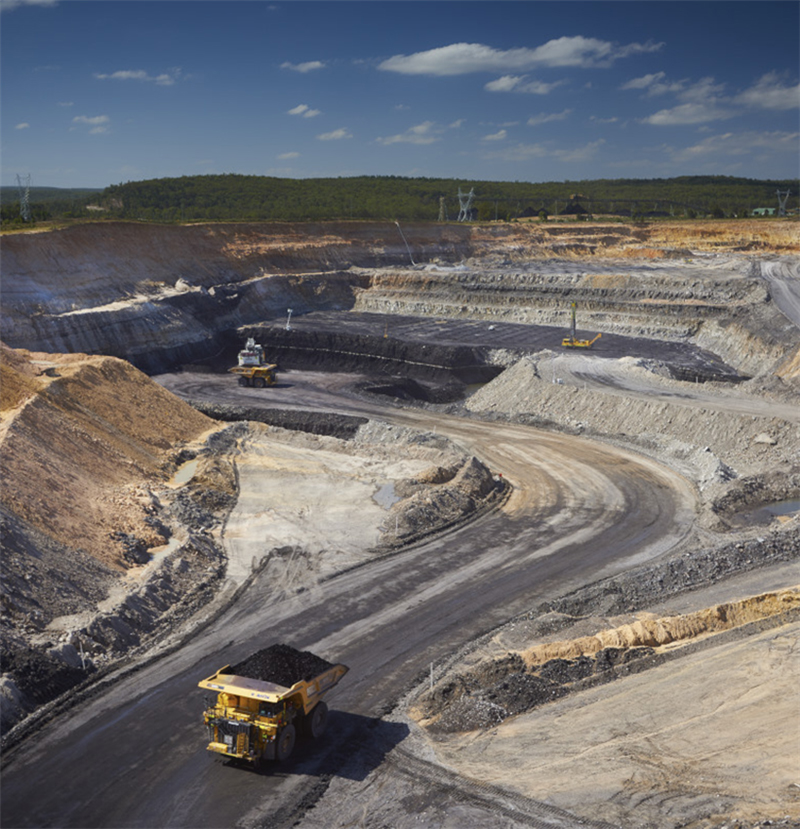
In order to meet the growing demand for industrial metals domestically, reduce external dependence, and improve resource security capabilities, China has embarked on a wave of "going global" in the past decade. Recently, S&P Global Market Intelligence compiled a set of charts showcasing China's mining industry's ambitions overseas from a foreign media perspective.
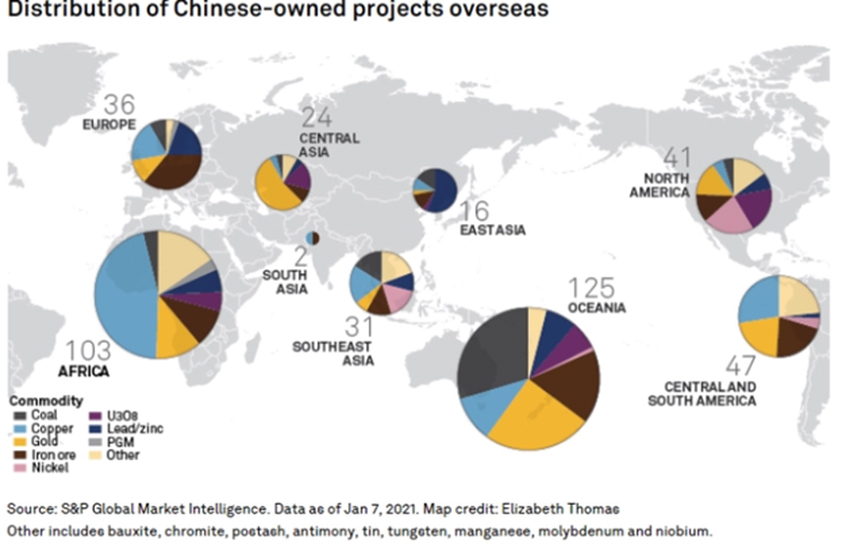
1、 Australia and Africa become gathering places for China's overseas resources
According to S&P Global data, Chinese companies currently have 425 mining projects overseas, mainly located in Australia and Africa. China's projects in the Australian region mainly focus on coal mines, gold mines, and iron mines. Yancoal Australia owns and manages 11 coal mines including Moraben, HVO, and MTW, as well as assets such as a 36.5% stake in Newcastle PWCS Port and a 27% stake in Newcastle Infrastructure Group (NCIG) Port. With JORC resources of 7.924 billion tons, reserves of 2.108 billion tons, and a raw coal production capacity of 80 million tons per year, it is currently the largest specialized coal producer in Australia. Zijin Mining has a gold resource of 10.98 million ounces and reserves of 860000 ounces in Norton Gold Fields, Australia, which is a typical case of Chinese enterprises successfully acquiring large-scale gold mines in production overseas. At present, Norton Gold Fields is promoting the technological transformation and capacity expansion of low-grade gold mines and difficult to process gold mines, and all of them can produce about 7 tons of gold in peak production years. Hanwang Holdings in China has also been rooted in the Australian gold mining industry for many years. Australia is rich in iron ore, and domestic companies such as Baowu Group, Ansteel Group, and CITIC have iron ore projects in Australia, but the quality is poor, which is also one of the main reasons why Chinese iron ore is subject to others.
China's projects in Africa are mainly focused on copper mines. In 2016, Luoyang Molybdenum Industry acquired the Tenke Fungurume copper mine in Freeport for $2.65 billion, and Zijin Mining and Ivanhoe Mines were two shining representatives in the joint development of the Kamoa Kakula copper mine project. The Tenke Fungurume copper cobalt mine has a copper resource of approximately 24.29 million tons and a cobalt resource of approximately 2.22 million tons, making it the largest producer of copper and cobalt for Luoyang Molybdenum Industry. In 2020, the mine achieved a net profit of 985 million yuan, accounting for 42.3% of the net profit of Luoyang Molybdenum Industry. The copper and cobalt production were about 181600 tons and 15400 tons respectively, directly helping Luoyang Molybdenum Industry become the world's second largest cobalt mine producer and top copper producer. The Kamoa Kakula copper mine project of Zijin Mining is highly anticipated. On May 25, 2021, the first phase of copper concentrate production was officially launched, and copper concentrate production was officially launched on May 25.
2、 Copper, lithium, and cobalt are most favored
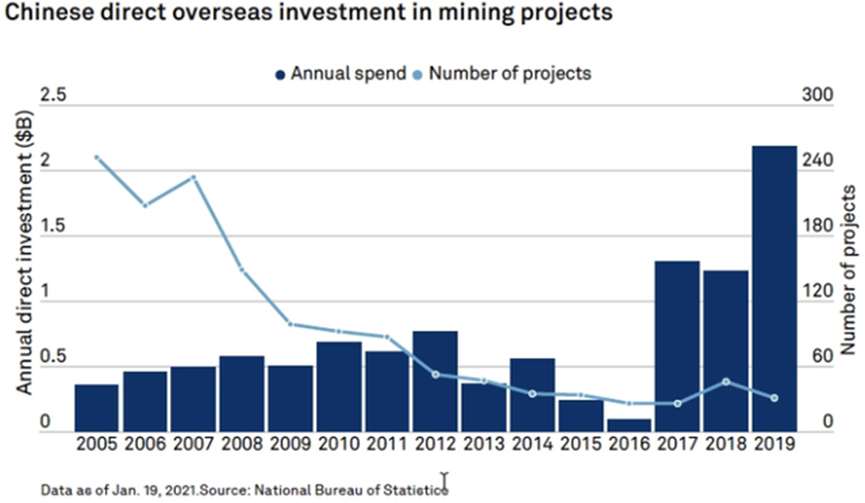
S&P Global stated that from 2011 to 2021, China's direct investment in overseas mines and projects reached 16.1 billion US dollars. In terms of ore types, most of the funds were invested in copper assets. Currently, Chinese companies have 30 operating copper mine projects overseas, and 38 are in the exploration stage.
Besides copper mines, cobalt and lithium have been the most favored targets by Chinese mining companies in recent years. As essential metals for new energy batteries, lithium and cobalt have become extremely popular in the market due to the surge in downstream demand, earning them the nickname "Lithium Grandpa" and "Cobalt Grandma". Recently, due to the impact of the epidemic, overseas lithium mines may experience supply shortages, especially in Africa, which is currently one of the important producers of lithium cobalt. Due to the impact of the epidemic, shipments have significantly decreased in the near future. There is a great mismatch and differentiation in the structure of overseas lithium mines. Some self-sufficient enterprises may not lack "lithium cobalt", but some enterprises will face difficulties in lithium mine procurement. Having a mine at home means you can 'do whatever you want'. At present, the prices of copper, iron ore, lithium, cobalt and other mineral products have risen significantly, and the pace of overseas mergers and acquisitions by domestic mining companies has slowed down. Previously acquired and put into operation overseas mines will usher in a situation of both quantity and price, ushering in a harvest period and accumulating energy for the next round of mergers and acquisitions cycle.